
 EN
EN

How to Choose Reliable Low Cost CNC Machining Parts for Your Project
Balancing Cost and Quality in Low Cost CNC Machining Parts
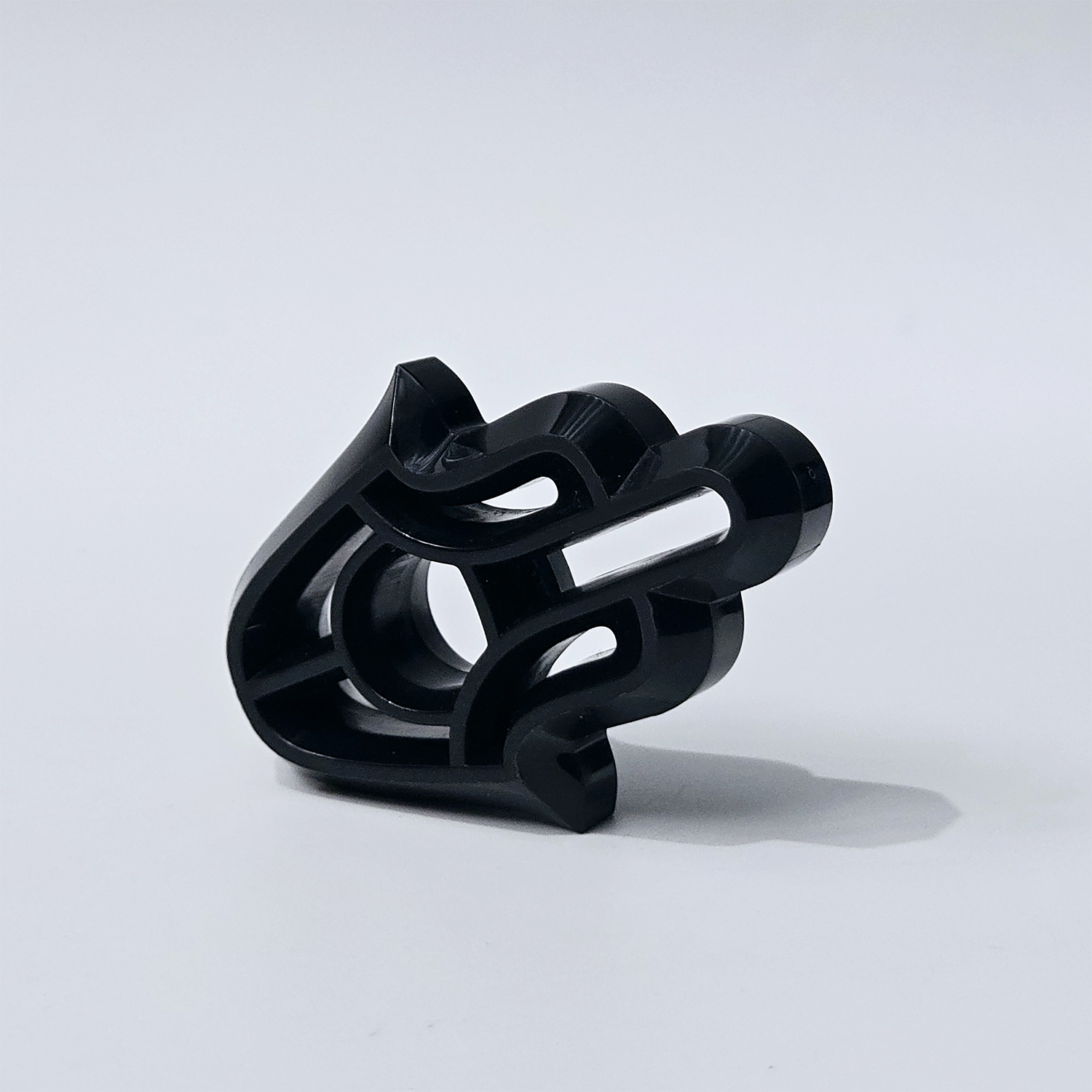
Unlocking the Strategic Nuances of the Cost-Quality Trade-off Dynamics in High-Precision CNC Machining
In every manufacturing project there's always this tug-of-war between keeping costs down and getting the right level of precision for those low cost CNC machining parts. When companies try to save money by cutting corners too much, they often end up with parts that don't hold up well enough or have dimensions off just enough to cause problems later on, especially in industries where failure isn't an option like aircraft components or surgical instruments. On the flip side, making everything super precise when it doesn't need to be just drives up the bill for no good reason. What works best is focusing tight tolerances only where they really matter. Take bearings for instance, these typically need around plus or minus 0.01 millimeters, but decorative surfaces can usually handle being off by as much as 0.1 mm without anyone noticing. Looking at industry data reveals something interesting: almost seven out of ten times when budgets go overboard, it's because specs were set wrong from the start. That's why smart manufacturers look at what each part actually needs to do before deciding how exact they should be about measurements instead of automatically going for the tightest specs available.
Paramount Pricing Determinants: Engineered Material Selections, Specialized Skilled Labor, and Precision-Calibrated Setup in High-Precision CNC Production Projects
Three pillars dominate CNC machining economics:
| Cost Driver | Impact Range | Optimization Strategy |
|---|---|---|
| Raw Materials | 40—60% | Use near-net-shape stock to minimize waste |
| Machine Labor | 20—35% | Standardize designs to reduce programming time |
| Setup/Changeover | 15—25% | Batch similar geometries to share fixturing |
The choice of materials makes a huge difference in overall costs sometimes changing them by as much as three times what they would otherwise be. Take aluminum alloys for instance they typically run around $25 per kilogram while titanium comes in at roughly $150 per kilogram. When it comes to labor costs things get even trickier because complicated processes need experienced workers who command wages between $35 and $50 an hour depending on where they work. Setup costs are another big factor worth mentioning here since these are fixed charges no matter how many units get produced. For small batch runs this becomes especially problematic. We've seen cases where setting up a single prototype eats up almost forty percent of the entire budget just getting everything ready before actual production starts.
Optimal Cost-Performance via Strategic Process Selection
Smart choices about which manufacturing processes to use can actually boost efficiency without compromising on quality. When shops combine basic 3-axis machining for straightforward parts with selective 5-axis work for tricky shapes, they typically cut down production time by around 30 to maybe even 50 percent compared to relying solely on 5-axis machines. High speed machining really helps bring down expenses too because it removes material faster and keeps tools working longer. Some actual shop floor data shows parts made from aluminum can cost about 22% less when using HSM techniques. Good design practices also matter a lot here. Designers who avoid those deep recesses that go more than four times the tool size and steer clear of those hard to reach inside corners just don't need all those expensive special tools anymore. Put all these approaches together and most manufacturers see somewhere between 15 and 25 percent savings on their bottom line, all while still hitting those ISO 2768 medium tolerances that customers expect.
Precision & Reliability via Dimensional Tolerance Control
How Dimensional Tolerance Impacts Part Functionality and Fit
Tolerance specs basically tell us how much a part can vary from its intended dimensions before it starts causing problems when assembled with other components. When manufacturers don't keep these within acceptable limits, all sorts of issues pop up in real world applications bearings get stuck, seals start leaking, and moving parts just won't slide properly together. For budget CNC machined parts especially, setting tolerances too tightly means higher scrap rates maybe around 25% or so depending on the shop, but if they're too loose then parts simply won't fit right when put into service. Getting this balance right depends heavily on what the part will actually be used for. Aircraft engine components need extremely tight specs like plus or minus 0.025 millimeters because any deviation could mean disaster at altitude. On the flip side, most plastic housing parts for consumer electronics can handle variations as big as 0.1mm without anyone noticing. And materials themselves throw curveballs aluminum tends to shrink as it cools after machining, so designers have to build in extra room for this natural contraction in their blueprints.
Optimizing Tolerance Specifications for Manufacturability and Cost
Achieving cost-effective precision requires strategic tolerance assignment aligned with production capabilities:
- Standardize tolerances where possible, leveraging ISO 2768-medium standards to avoid custom tooling fees
- Prioritize critical features, applying tighter tolerances only to functional surfaces like sealing faces
- Consider measurement feasibility—specifications beyond standard metrology tools (e.g., CMMs) incur 15—25% surcharges
Loosening non-critical tolerances by one grade slashes machining time by 20% without compromising performance. Design modifications like adding relief grooves simplify holding and reduce vibration-induced dimensional errors—preventing over-engineering while preserving reliability.
Cost-Effective, Functional CNC Parts via Strategic Material Selection
Choosing the right material makes all the difference when it comes to both how well low cost CNC machined parts work and what they end up costing. When picking materials, engineers need to think first about what the part actually needs to do. Does it have to handle mechanical stress? Resist corrosion? Stay stable under heat? Getting these basics right helps avoid making parts stronger than necessary. For things like car brackets where weight matters but strength is still important, aluminum alloys strike a good balance between being easy to machine and staying light. Stainless steel works better for parts that get worn down over time. The ease of machining also plays into costs. Softer stuff like certain plastics means less wear on tools and faster production runs, which cuts down on labor costs in the long run. Shops that understand this tend to save money without sacrificing quality.
Choosing Materials Based on Application, Machinability, and Cost
Evaluate materials through three lenses:
- Application Needs: Will the part face high temperatures or chemicals? UV-resistant plastics (e.g., PEEK) prevent degradation in outdoor settings.
- Machinability: Aluminum machines 50% faster than steel, reducing labor costs by ~$15/hour.
- Cost Trade-offs: While titanium offers strength, its $50/kg price may be prohibitive; carbon steel ($3/kg) often suffices for structural parts.
How Material Availability Affects Lead Time and Production Costs
When materials become scarce, it's not uncommon for projects to get delayed anywhere from two to four weeks, sometimes pushing back timelines significantly. Costs tend to go up around 20% too. Take aerospace grade aluminum as an example. When this stuff becomes hard to find, companies often have no choice but to switch to alternatives like brass, which adds about $120 extra cost per batch. That kind of thing really eats into profit margins. A smarter approach? Stick with materials that are readily available on the market. Something like 6061 aluminum works great most of the time and keeps supply chain issues at bay. Buying in bulk also makes a difference. Companies report saving roughly 12% on unit costs when they purchase larger quantities upfront. Lead times shrink down to less than ten days in many cases, making production planning much more predictable.
Design for Manufacturability: Cut Costs, Retain Quality
Design for Manufacturability (DFM) systematically optimizes part designs to enhance production efficiency while controlling expenses for low cost CNC machining parts. By integrating manufacturing considerations early, engineers eliminate unnecessary complexities that drive up machining time and material waste.
Applying DFM Principles to Minimize CNC Machining Complexity
Key DFM strategies include standardizing component geometries, reducing multi-axis tool rotations, and minimizing non-critical tight tolerances. Simplified designs with uniform wall thicknesses and symmetrical features accelerate machining by 15—30% while lowering programming costs. Replacing custom threads with standardized fastener options cuts setup time by 20% per project.
Avoiding Costly Design Features: Sharp Corners, Thin Walls, and Complex Geometries
Certain design elements disproportionately increase CNC expenses:
- Sharp internal corners require specialized tools and slower feed rates
- Thin walls (<0.5mm) demand precision tooling and risk warping
- Unnecessary 3D contours extend machining cycles by 40%
Opt instead for radii exceeding tool diameters, wall thicknesses above 1mm, and planar surfaces where feasible. This reduces tool breakage incidents by up to 60% while maintaining functional integrity.
Trusted CNC Partner: Scalability & Consistency
Evaluating Suppliers: Capabilities, Lead Times, and Quality Assurance
When looking for manufacturing partners, focus on those who have good multi-axis CNC machines and can show their quality control procedures. Check if they hold certifications such as ISO 9001, which basically means they follow certain standards for making sure products meet specifications. To get a sense of how scalable a supplier really is, look at their production numbers. A company that handles orders under 100 units compared to one capable of running 10 thousand plus parts shows completely different capabilities when it comes to scaling up production. Industry studies suggest that manufacturers with solid quality control systems tend to cut down on rejected parts by around 40 percent, though results will vary depending on the situation. Ask about delivery timelines upfront and whether they offer expedited services for urgent needs. Some important figures worth getting from potential suppliers include...
- Average on-time delivery rate
- Dimensional inspection frequency
- Material traceability procedures
Key Questions to Ask Your CNC Machining Service Provider
Clarify these critical factors before finalizing partnerships:
- What tolerance verification methods do you employ?
- How do you handle design changes during production?
- Can you provide material certification documentation?
- What contingency plans exist for supply chain disruptions?
- Do you offer prototyping before full-scale runs?
Responses reveal operational maturity and alignment with cost targets while maintaining quality standards.